China's Stealth Aircraft Buildup: Assessing the 2030 Crossover
China is on track to field over 1,300 fifth-generation fighters by 2030. This analysis examines the production trajectories of the J-20 and J-35, the acceleration of sixth-generation prototypes, and the strategic implications for the global aerospace industry.

Benjamin Perez
CEO
Featured
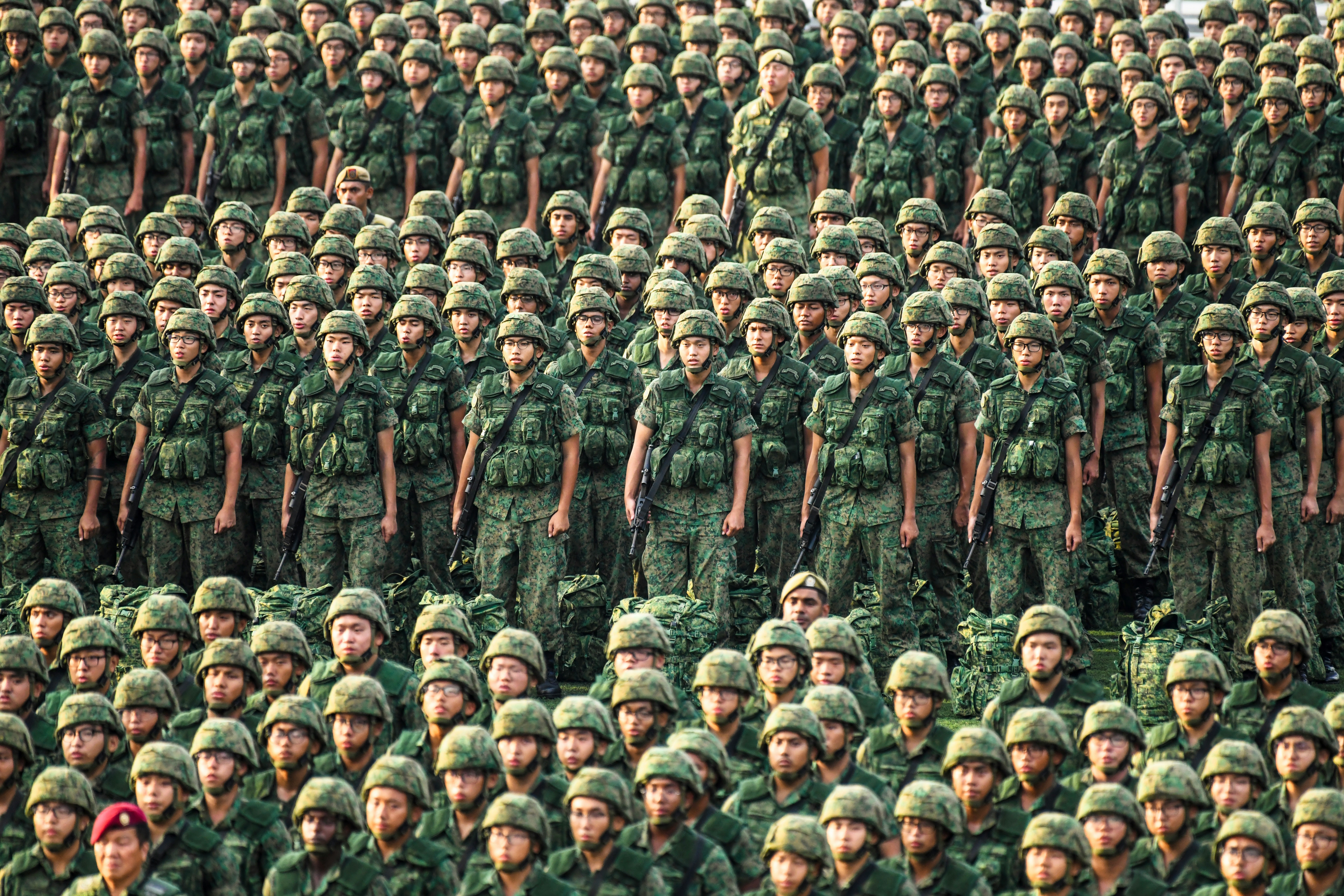
The Great Crossover: Analyzing China’s Stealth Fighter Production Surge
In the world of strategic defense analysis, there are milestones that signal a shift in the global order and others that fundamentally rewrite the rules of engagement. As of February 2026, we have reached one of the latter. The People’s Liberation Army Air Force (PLAAF) has officially surpassed a critical threshold: its fleet of Chengdu J-20 “Mighty Dragon” air superiority fighters now exceeds 300 aircraft. To put this in perspective, this figure surpasses the total production run of 187 F-22 Raptors ever produced by the United States.
This is not merely a symbolic victory. It is the leading edge of the largest stealth aircraft production buildup in history. Driven by massive infrastructure investments and an institutionalized “Military-Civil Fusion” (MCF) strategy, China is on a trajectory to field between 1,000 and 1,300 fifth-generation fighters by 2030. This surge is reshaping the Indo-Pacific air power balance in real-time, demanding a rigorous assessment of the industrial reality behind the headlines.
The Production Reality: “Mighty Dragons” and Industrial Scale
The backbone of China’s current stealth capability is the Chengdu J-20. While Western analysts once questioned China’s ability to mass-produce advanced airframes, the data now tells a different story. As of early 2026, the Chengdu Aircraft Corporation (CAC) is operating five active production lines, delivering approximately 120 airframes annually. Some domestic Chinese media reports suggest that total capacity could theoretically reach 240 units per year.
Even using conservative figures, the Royal United Services Institute (RUSI) estimates that China’s annual acquisition rate for fifth-generation aircraft is now approximately three times that of the United States. This volume is further bolstered by the introduction of variants like the J-20A—featuring the WS-15 engine and supercruise capability—and the J-20S, the world’s first operational two-seat stealth fighter, which debuted in late 2025.
Table 1: J-20 “Mighty Dragon” 5-Year Fleet Projection
Year Annual Production Cumulative Fleet vs. U.S. F-22 Fleet vs. U.S. F-35 Fleet
2026 ~120 ~420 2.2x 0.5x
2027 ~130 ~550 2.9x 0.6x
2028 ~140 ~690 3.7x 0.7x
2029 ~150 ~840 4.5x 0.8x
2030 ~160 ~1,000 5.3x 0.9x
Note: F-35 projections based on global deliveries; USAF-specific fleet is a fraction of the total.
Parallel to the J-20, the Shenyang Aircraft Corporation (SAC) is executing an equally ambitious buildout for the J-35 stealth fighter program. SAC has invested 8.6 billion yuan (approximately $1.2 billion USD) into “Shenyang Aerospace City,” a 4.2 km² facility that includes a 270,000 m² factory floor—a scale comparable to the Lockheed Martin F-35 plant in Fort Worth. Mass production of the land-based J-35A and carrier-capable J-35B is set to begin in 2026, with an initial target output of 100 airframes per year.
The 2030 Projection: Reaching Parity in the Pacific
The most striking implication of this dual-track production (Chengdu and Shenyang) is the cumulative total of China’s stealth fleet by the end of the decade. By 2030, the combined fleet of J-20s and J-35s is projected to reach 1,300 to 1,500 aircraft.
At this volume, China’s fifth-generation inventory will approach parity with the total global fleet of F-35s distributed across 19 nations. Crucially, while the F-35 fleet is globally dispersed, China’s stealth assets will be concentrated entirely within the Indo-Pacific theater. This concentration of force represents a fundamental challenge to regional air dominance.
The Sixth-Generation Wild Card: Prototyping at Speed
While the West focuses on China’s fifth-generation volume, Beijing is already deep into its next evolutionary step. China currently has two parallel sixth-generation fighter programs in flight testing: the Chengdu J-36 (a trijet tailless flying wing) and the Shenyang J-50 (a twin-engine lambda wing).
The U.S. Department of Defense acknowledge that China’s prototyping timeline is currently three to four years ahead of the American Next Generation Air Dominance (NGAD/F-47) programs. The cadence of this development is remarkably high. For example, the J-36 progressed from its first flight to a third prototype—incorporating significant design changes to its exhausts, intakes, and landing gear—in just 12 months. This rapid iterative cycle, supported by advanced manufacturing techniques like “pulse assembly lines,” suggests an Initial Operating Capability (IOC) for these platforms in the early 2030s.
The Readiness Imperative: Western Defense and the MRO Challenge
Despite the staggering production numbers, China faces a significant qualitative bottleneck: the engine reliability gap. Chinese domestic engines, such as the WS-10 and WS-15, require overhauls after only a few hundred flight hours, whereas Western equivalents operate for thousands of hours between major service intervals.
This gap creates a paradox. While China is producing aircraft at an unprecedented rate, the maintenance burden is exponentially higher. A fleet of 1,000+ stealth fighters with short engine life creates a massive and constant demand for maintenance, repair, and overhaul (MRO) throughput. Frequent engine downtime effectively reduces the mission-capable rate of the total fleet.
For Western defense planners, this identifies “readiness” as the critical competitive edge. Because peer adversaries are producing at three times the rate, Western forces must maximize the availability of every existing airframe (F-22, F-35, CV-22). This urgency is driving the demand for autonomous and automated inspection solutions that can shorten maintenance cycles and keep fleets mission-ready without relying solely on a shrinking pool of human technicians.
Table 2: Combined Stealth Fleet Projection (2026–2030)
Year J-20 Fleet J-35 Fleet Total 5th-Gen 6th-Gen Status Total PLAAF Fighters
2026 ~420 ~50–70 ~470–490 Flight testing ~2,400
2027 ~550 ~120–150 ~670–700 Advanced testing ~2,600
2028 ~690 ~210–250 ~900–940 Pre-production ~2,800
2029 ~840 ~310–370 ~1,150–1,210 LRIP possible ~3,000
2030 ~1,000 ~430–520 ~1,430–1,520 Early IOC ~3,200+
Strategic Assessment: A New Era of Industrial Competition
The data suggests that China has moved past the “catch-up” phase of aerospace development and has entered a phase of sustained industrial dominance in terms of volume. Beijing is compensating for its qualitative engine gaps through sheer production mass and a rapid, iterative prototyping cycle for next-generation systems.
As China enters its 15th Five-Year Plan (2026–2030), the institutionalization of Military-Civil Fusion ensures that commercial AI and manufacturing innovations will continue to feed directly into defense capabilities. For the global aerospace industry, the era of assuming Western numerical superiority is over. The new competition will be defined by two factors: the speed of next-generation development and the ability to maintain fleet readiness at a scale and tempo that manual, legacy processes cannot support.
This analysis was produced by the Arachnid Systems intelligence team.